Jackson County Court handles a wide range of legal matters for residents and businesses in the county. It serves as the central place for civil, criminal, family, and probate cases. Visitors can access case records, court calendars, and important court services. The court also supports attorneys and staff by providing clear information about filing procedures and court fees. With online tools, users can quickly check schedules or find records without visiting the courthouse.
Jackson County Court Information is available for anyone needing updates on hearings or public records. The court ensures transparency by offering details about cases, motions, and judgments. A Quick Info Panel lets users select a case type to see summaries at a glance. By combining traditional services with online access, the judicial center helps residents stay informed while saving time. Local judiciary staff manage schedules, assist with legal services, and maintain smooth court operations across the county.
How to Search Court Records and Cases
Jackson County Court Records can be searched online through the county’s official records system or requested directly from the clerk’s office. A simple case lookup allows users to find filing details, docket entries, and hearing schedules. Reliable Jackson County Court Information helps residents, attorneys, and researchers review public legal records without visiting the courthouse. Most public legal records in Jackson County are managed by the Jackson County Clerk of Circuit Court. The clerk maintains the official database used for online case search, docket review, and public records lookup.
Official website URL: https://www.jacksonclerk.com
Identify the Record Type
Before starting a court search, determine the type of case you need. Court systems organize files into divisions, and selecting the correct category helps narrow results.
Common record types include:
- Civil cases – contract disputes, property claims, and lawsuits
- Criminal cases – felony or misdemeanor charges
- Family cases – divorce, custody, or child support matters
- Probate cases – wills, estates, and guardianship proceedings
- Traffic cases – citations and non-criminal violations
Gather Key Case Details
A successful case lookup requires some identifying information. Users should collect the following details before beginning an online case search:
- Case number (fastest search method)
- Party name involved in the case
- Filing date or year
- Court division or case type
Use the Online Court Search System
Many users perform a public records lookup through the official online portal. The search system allows users to enter case details and filter results.
Typical steps include:
- Visit the official website: https://www.jacksonclerk.com
- Open the Online Services section.
- Select Search Court Records.
- Choose Public Access in the records system.
- Select Person Search or Case Search.
- Enter information such as last name, case number, or filing date.
- Apply filters such as court type or date range.
- Click Search to view matching records.
Request Records in Person or by Email
Some documents may not appear in the online system. In these situations, users may request copies directly from the clerk’s office.
The process usually involves:
- Submitting a records request form
- Providing a case number or party name
- Presenting government identification
- Paying copy or certification fees
Case Lookup and Tracking
Jackson County Courts allow the public to review and monitor ongoing legal matters through online case tracking systems. These tools provide clear Jackson County Court Information about filings, hearings, and court decisions. By using a case lookup system, users can follow the progress of legal matters handled within the local judiciary. This process helps attorneys, residents, and researchers review public case activity without visiting the courthouse. Access to court records improves transparency and makes it easier to track important legal proceedings. Many users rely on these services to stay updated on hearing schedules, case status updates, and official rulings.
Checking Current Cases
Searching current cases in Jackson County Courts usually begins with a basic case lookup. The court system organizes records by case type, which helps users find relevant information more quickly. Selecting the correct category makes the court search process easier and reduces confusion when reviewing results. Most online systems allow users to search using a party name, case number, or filing date. Once the search is completed, the results display the case summary and related docket information. This allows users to quickly identify whether the case they need is active or completed.
Common case types that can be searched include:
- Civil cases – disputes involving contracts, financial claims, or property matters
- Criminal cases – misdemeanor or felony charges processed by the court
- Family cases – divorce, custody, and child support matters
- Traffic cases – driving violations, citations, and related infractions
Case Status
Every case record contains a case status, which indicates the current stage of the legal process. Reviewing the status helps users understand how far the case has progressed within the judicial system. These labels provide quick insight into whether the case is still active or already resolved. Status information is updated as legal proceedings move through different stages of review. By checking these updates regularly, users can stay informed about changes in hearings or court actions. This information plays an important role in tracking cases within the local judiciary.
Common case status labels include:
- Open – the case is currently active in court
- Pending – the court is waiting for filings or upcoming hearings
- Scheduled – a hearing or court event has been placed on the calendar
- Closed – the case has reached a final decision
Reviewing Hearing Dates and Court Decisions
Court records often include a court docket, which acts as a timeline of events in a case. The docket lists important updates such as hearings, filings, and decisions made by the judge. Reviewing these entries helps users understand the history and development of a case. Hearing schedules are especially important for parties involved in the legal process because they indicate when court appearances are required. The docket also records important legal actions that may affect the final outcome of the case. Checking this information regularly helps users stay updated on changes in court activity.
Important docket details may include:
- Scheduled hearing dates and courtroom assignments
- Filed motions or legal documents submitted by parties
- Judge orders or rulings issued during proceedings
- Final court decisions or judgments
Court Services and Departments
Jackson County Court Services support a wide range of legal needs through clearly defined departments within Jackson County Courts. Each department handles specific case types and follows established legal procedures to process filings, hearings, and court documentation. These services help residents, attorneys, and businesses complete court-related tasks efficiently. Court departments focus on accuracy, proper recordkeeping, and timely case processing. By organizing services by division, the court system makes administrative services easier to manage. This structure also helps users interact with the correct department from the start.
Civil Division
The civil division manages non-criminal disputes between parties. These cases often involve financial claims, contracts, property issues, or other civil matters. Court staff review filings, assign case numbers, and schedule hearings according to legal procedures. Users can submit civil filings either online or in person, depending on the document type. Proper court documentation is required for each filing to avoid delays. This division plays an important role in resolving disputes through structured legal processes.
Common civil services include:
- Filing complaints and responses
- Managing court documentation for lawsuits
- Scheduling hearings and trials
- Providing copies of judgments and case records
Criminal Division
The criminal division handles cases involving alleged violations of the law. These cases may include misdemeanors or felony charges processed through the court system. Administrative services in this division support arraignments, hearings, and case tracking. Court records are updated as legal proceedings move forward. Accurate documentation helps maintain transparency throughout the process. This division ensures that cases follow established court procedures from start to finish.
Typical criminal division services include:
- Processing criminal case filings
- Recording court orders and rulings
- Managing hearing schedules
- Maintaining official criminal case records
Family Division
The family division focuses on legal matters related to family relationships. These cases often require detailed court documentation and ongoing case management. Court staff assist with filings and scheduling while maintaining confidential records. Many users interact with this division multiple times during a case. Clear procedures help reduce confusion during emotionally sensitive matters. This division supports consistent handling of family-related legal proceedings.
Family cases commonly include:
- Divorce and separation cases
- Child custody and visitation matters
- Child support and related filings
Probate Division
The probate division oversees cases involving estates, wills, and guardianships. These cases often require careful review of legal documents and financial records. Administrative services in this division help confirm compliance with court requirements. Court staff manage filings related to estate administration and asset distribution. Accurate records help protect the rights of all parties involved. Probate cases often involve long-term case monitoring.
Probate services include:
- Estate administration filings
- Guardianship case processing
- Court review of wills and estate documents
Traffic Division
The traffic division processes driving-related violations and citations. These cases usually follow a simpler legal process compared to other divisions. Many traffic services are available online, which saves time for users. Court documentation records payments, hearings, and final outcomes. Some cases still require in-person appearances depending on the violation type. This division supports efficient resolution of traffic matters.
Online and In-Person Services
Jackson County Court Services offer both online and in-person options. Online services may include filing documents, reviewing case details, or requesting records. In-person services are available for original filings, certified documents, and court appearances. This flexibility allows users to choose the most convenient method.
Court Calendar and Scheduling
Jackson County Court maintains an official court calendar that outlines scheduled hearings, trials, and court events across all divisions. This calendar helps users track case activity and prepare for upcoming court appearances. By reviewing the court calendar regularly, parties can confirm hearing dates and stay aware of filing deadlines. The schedule supports smooth case management and public awareness of court proceedings. Accurate timing helps reduce missed appearances and procedural delays. Court scheduling plays a central role in daily court operations.
The calendar system used by Jackson County Court follows a structured weekly schedule. Most court sessions are held Monday through Friday, excluding official holidays. Standard courthouse operating hours are 8:00 a.m. to 5:00 p.m., with hearings typically scheduled during morning and afternoon sessions. Actual hearing times may vary by division and judge. Users should always confirm dates through the court calendar before attending.
Daily, Weekly, and Monthly Court Schedules
The court calendar is organized into daily, weekly, and monthly views to support different planning needs. A daily schedule lists hearings and court sessions set for a specific date. Weekly schedules help users review upcoming activity over several days. Monthly schedules provide a broader overview of court events and trial settings.
Court schedules commonly show:
- Case number and case type
- Scheduled date and time
- Assigned courtroom or division
- Judge or session information
Finding Hearings and Upcoming Trials
Hearing dates and trial settings appear on the docket calendar once scheduled by the court. Users can search by date, case type, or department to locate relevant court events. Trial dates are often posted weeks or months ahead, while hearings may be scheduled closer to the event. Court calendars may update if a hearing is rescheduled or continued. Regular review helps users stay informed. This process supports accurate planning for court appearances.
Information shown for hearings usually includes:
- Hearing date and start time
- Type of proceeding
- Division handling the case
Filing Deadlines and Special Session Notices
The court calendar highlights filing deadlines linked to scheduled hearings and motions. These deadlines apply to documents such as responses, briefs, and supporting filings. Missing a deadline can delay proceedings or affect case progress. Special session notices may appear during holidays or for special court operations. These notices inform users of changes to normal scheduling. Reviewing calendar updates helps avoid conflicts.
Common notices include:
- Filing cut-off dates
- Holiday court closures
- Special or extended court sessions
Filing and Legal Procedures
Jackson County Court Services follow defined filing rules that help cases move through the court system in an organized manner. Filing through Jackson County Court requires proper court documentation and compliance with filing guidelines. Each case type has its own legal procedures and submission rules. Clear filing steps reduce delays and limit document rejections. Users can file documents online or in person depending on the case and document type. Careful preparation supports smooth administrative processing.
Court staff handle filings as part of their administrative services. They review submissions for completeness but do not provide legal advice. Understanding filing requirements before submission helps avoid repeated visits or corrections. This section explains how to file documents correctly and what to expect during the process.
Filing Procedures by Case Type
Filing procedures vary by division, and each case type follows specific legal rules. Civil cases often involve multiple filings over time, while family and probate cases require detailed forms and supporting records. Criminal case filings are usually handled by prosecutors, though related motions may still be submitted by parties. Selecting the correct case type ensures documents are routed properly. Filing the wrong document under the wrong division may cause processing delays. Users should review division-specific requirements before submitting paperwork.
Common filing categories include:
- Civil cases involving disputes or financial claims
- Family cases such as divorce or custody matters
- Probate cases related to estates or guardianships
- Criminal-related filings connected to active cases
Forms, Fees, and Required Documents
Court forms must be completed fully and accurately. Each form includes required fields that must match supporting documentation. Filing fees depend on the case type and document being submitted. Some users may qualify for fee waivers based on financial eligibility. Incomplete forms or missing payments may result in rejected filings. Reviewing all documents before submission helps avoid errors.
Common requirements include:
- Completed and signed court forms
- Supporting documents or exhibits
- Payment of filing fees or waiver forms
Online and In-Person Filing Options
Online filing systems allow users to submit documents electronically. This option saves time and provides confirmation after submission. Users must upload documents in the accepted format and complete payment steps. In-person filing is available for users who prefer direct assistance with administrative steps. Original documents or certified filings may require courthouse submission. Both methods follow the same filing guidelines.
Contact Information and Support
Jackson County Court provides clear contact details and location information to help users receive timely court assistance. Jackson County Court Services include administrative support for filings, scheduling questions, and public record requests. The clerk’s office serves as the main contact point for most court-related inquiries. Court staff assist with procedural questions and court documentation. These services support transparency and smooth communication within the local judiciary. Having accurate contact and location details helps users plan courthouse visits and resolve questions efficiently. This section outlines clerk office contacts, support options, and the official courthouse address.
Clerk’s Office Contact Details
The clerk’s office handles daily administrative support for Jackson County Court. Staff members assist with case-related questions, filing procedures, and record requests during business hours. Legal guidance is limited to procedural information only.
Clerk of Court – Jackson County
- Phone: (850) 482-9552
- Office Hours: Monday–Friday, 8:00 AM – 4:30 PM
- Services: filings, records, payments, scheduling inquiries
Online Support and Assistance Options
Online support options allow users to submit questions without visiting the courthouse. These services are useful for non-urgent requests and general administrative support. Users must include accurate contact information and relevant case details. Response times depend on request volume.
Common online support services include:
- Case inquiry forms
- Public records request forms
- Administrative service requests
Courthouse Location and Directions
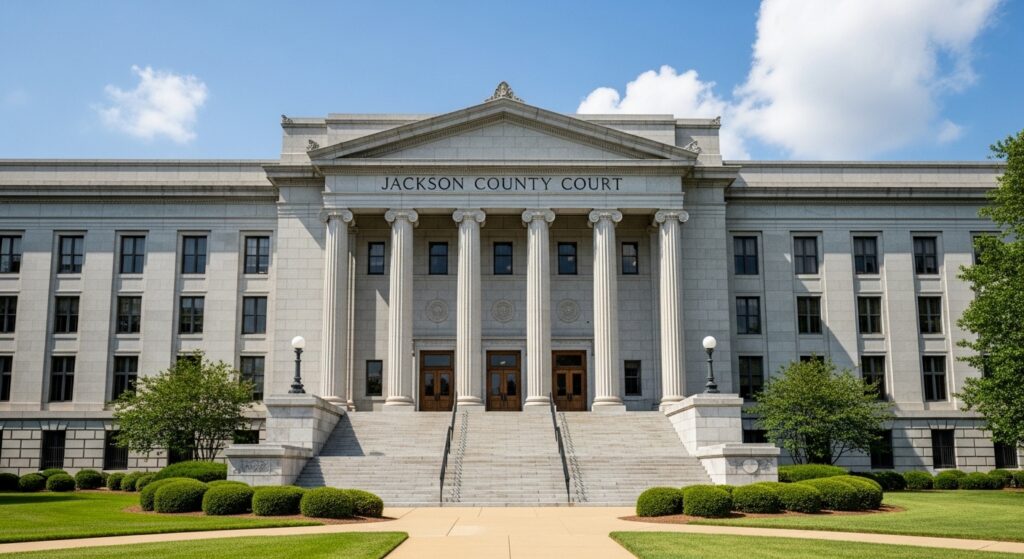
This location handles civil, criminal, family, probate, and traffic matters. The clerk’s office operates inside the courthouse. Users can enter the address into any online map service to receive driving directions, estimated travel time, and nearby parking options. Reviewing directions before visiting helps avoid delays and supports smooth courthouse access. The main courthouse for Jackson County Courthouse is located at:
4445 Lafayette Street
Marianna, FL 32446
Frequently Asked Questions
Jackson County Court Information is designed to help residents and legal professionals find accurate answers about cases, court records, and services. The FAQ section provides detailed guidance on common questions related to Jackson County Court Services and everyday interactions with the court. These answers focus on practical steps, public procedures, and official processes. By reading this information, users can understand how to access records, file forms, and follow court protocols. The section also helps reduce confusion for first-time users and self-represented litigants. Transparency and clarity are key principles of the local judiciary. Clear instructions save time and help prevent errors when dealing with court matters. The FAQs are structured to provide quick insights while offering deeper explanations where necessary.
How can court cases be viewed online?
Court cases under Jackson County Court can be accessed through the official online case search system. Users can search using case numbers, party names, or filing dates to find detailed information about ongoing and past cases. The system displays summaries, hearing schedules, and docket entries for public review. Certain cases, such as sensitive family or juvenile cases, may have restricted information due to confidentiality rules. Criminal cases may provide summaries but with limited document access. By reviewing the online results, users can confirm the current status and upcoming hearings. Using filters and correct spelling improves the accuracy of the search. Regular checks ensure users have the most up-to-date information available.
Which court records are public?
Many records maintained by Jackson County Court Services are classified as public under state law. Civil, traffic, and probate case information is usually available for viewing by anyone. Public records typically include case summaries, docket entries, hearing dates, and final judgments. Certain criminal case details may also be available, though sensitive information is often restricted. Family law cases are frequently limited to protect privacy. Records that are sealed, confidential, or under court order do not appear in public searches. Understanding which records are accessible helps users obtain the information they need without violating court rules. The clerk’s office provides guidance for accessing public records safely. Following the correct procedures ensures compliance with legal requirements and court policies.
How can a motion or legal form be filed?
Filing a motion or legal form requires following the established guidelines of Jackson County Court Services. Users must identify the correct case type and division before submission. Forms should be completed fully and signed as required to ensure acceptance. Filing can be done online through the court’s electronic filing system or in person at the clerk’s office. Submission may involve paying applicable fees depending on the document. Any mistakes, missing information, or incorrect forms can result in delays or rejected filings. Court staff can provide procedural guidance but cannot offer legal advice. Preparing documents carefully and reviewing instructions thoroughly improves the efficiency of the filing process. Accurate filings help maintain proper court records and prevent unnecessary delays in proceedings.
Can help be received with court procedures?
Administrative support at Jackson County Court is available for users who need assistance with procedural steps. Staff members provide guidance on completing forms, submitting motions, and paying filing fees. They also clarify filing deadlines and document requirements. However, court personnel do not provide legal advice, interpretation of laws, or strategy recommendations. Self-represented litigants remain responsible for following all legal procedures correctly. Written guides, procedural instructions, and form checklists are available to help users comply with court rules. Using these resources reduces errors and ensures documents meet official standards. The availability of staff assistance promotes transparency and accessibility. Procedural support helps users understand the correct steps for efficient case management.
How can a docket search be used effectively?
A docket search allows users to track case activity in a clear and chronological manner. Users can review filings, hearing dates, court orders, and other case actions recorded by the court. Accurate spelling of names and case numbers is critical for effective search results. Applying filters such as date ranges, case type, or division helps narrow down results and improves usability. Docket entries are updated regularly to reflect changes in case status, scheduled hearings, or final decisions. Monitoring these updates provides a reliable overview of case progress. Users can plan for upcoming hearings or prepare necessary documents based on the docket. Using the docket search properly ensures timely and accurate access to Jackson County Court Information. This tool is essential for both attorneys and self-represented parties to follow ongoing legal proceedings.